

Private Power Pole Installations: What Central Coast Property Owners Must Know
Establishing electrical service to buildings often requires private power pole installation—a specialised undertaking connecting your property to the broader electricity distribution network. Whether you’re building a new home on vacant land, constructing outbuildings on established properties, or relocating existing service connections, understanding private pole requirements ensures successful outcomes.
This critical infrastructure demands professional expertise, meticulous planning, and strict adherence to regulatory frameworks protecting property owners, neighbours, and the electrical grid’s integrity.
Why Private Poles Become Necessary
Numerous property configurations and situations necessitate private power pole installations across the Central Coast region. Understanding these scenarios helps property owners recognise when poles become necessary and plan accordingly.
Properties set significantly back from street frontages commonly require private poles bridging distances between network infrastructure and buildings. When homes sit thirty metres or more from property boundaries, overhead service spans often exceed what single-run cables can safely support, necessitating intermediate poles maintaining proper cable tensions and clearances.
Rural and semi-rural properties with long driveways almost invariably need private poles for overhead service delivery. These installations support service cables across distances that would otherwise sag dangerously low or create excessive stress on connection points.
Multiple buildings on single properties frequently require additional poles distributing power to structures beyond main residences. Workshops, barns, guest accommodations, and pool equipment buildings all need electrical service often delivered through private pole infrastructure when underground alternatives prove impractical or cost-prohibitive.
Site topography influences pole requirements significantly. Properties with substantial elevation changes between street levels and building sites may need poles managing service cable routing across terrain variations whilst maintaining required clearances and preventing excessive cable stress.
Aesthetic considerations sometimes drive private pole installations even when alternatives exist. Property owners preferring overhead services screened by strategic pole placement and landscaping may choose this option over underground alternatives visible at building connection points.
Regulatory Landscape Governing Installations
Private pole installations operate within comprehensive regulatory frameworks administered by multiple authorities ensuring safety, reliability, and grid compatibility.
The NSW Government’s electrical compliance system establishes fundamental safety and technical requirements all installations must satisfy. These regulations address structural integrity, electrical safety, clearance requirements, and ongoing maintenance obligations protecting both property owners and broader communities.
Electricity distributors impose additional technical standards specific to their networks. Ausgrid, Endeavour Energy, and Essential Energy each maintain detailed specifications covering pole types, heights, materials, conductor specifications, and installation methods. These requirements ensure network compatibility whilst maintaining grid reliability across their respective service territories.
Local councils exercise planning oversight affecting pole locations, types, and heights permitted within their jurisdictions. Development applications for new constructions typically address electrical infrastructure, but standalone pole installations may require separate council approvals depending on local policies and specific pole specifications.
Level 2 Accredited Service Provider credentials represent mandatory requirements for anyone installing private poles. This specialised accreditation demonstrates the technical knowledge and network operator authorisation necessary for safe, compliant installations connecting to distribution infrastructure legally and properly.
Comprehensive Site Assessment and Planning
Successful pole installations begin with thorough site assessments addressing numerous factors affecting installation feasibility, costs, and technical requirements.
Terrain characteristics significantly influence pole positioning and installation complexity. Slopes, soft soil, rocky ground, and water tables all affect foundation design and installation methods. Professional electricians evaluate these conditions determining appropriate foundation types and sizes ensuring long-term structural stability.
Underground service locations require identification before excavation commences. Water pipes, sewer lines, telecommunications cables, gas mains, and stormwater drainage may occupy areas where poles or footings must be installed. According to NECA, contacting relevant authorities for service location prior to digging prevents expensive damages, dangerous incidents, and project delays.
Clearance requirements dictate minimum distances between poles, overhead conductors, and various objects. Service cables must maintain specified heights above ground, driveways, pathways, and other surfaces. Horizontal clearances from buildings, trees, property boundaries, and neighbouring structures ensure safety whilst facilitating maintenance access throughout pole service lives.
Future property development deserves consideration during initial planning stages. Will additional outbuildings eventually require service extensions? Might three-phase power become necessary for workshop equipment, large air conditioning systems, or electric vehicle charging? Addressing these questions during initial design allows cost-effective accommodation of future needs avoiding premature modifications.
Material Selection for Long-Term Performance
Several pole material options suit Central Coast installations, each offering distinct performance characteristics, aesthetic qualities, and cost implications warranting careful evaluation.
Treated timber poles represent traditional choices combining proven performance with economical pricing. Modern preservative treatments provide excellent resistance to rot and insect damage, delivering service lives typically ranging from thirty to fifty years depending on timber species, treatment quality, and environmental exposure conditions.
Hardwood species including ironbark and spotted gum offer superior durability and strength compared to softer timbers. Whilst commanding premium prices initially, hardwood poles often prove cost-effective over extended service lives through reduced maintenance requirements and exceptional longevity in challenging environments.
Treated pine represents a popular mid-range option balancing initial costs and performance for typical residential applications. Properly treated pine poles provide reliable service for three to four decades when correctly installed and maintained, making them cost-effective choices for most Central Coast properties.
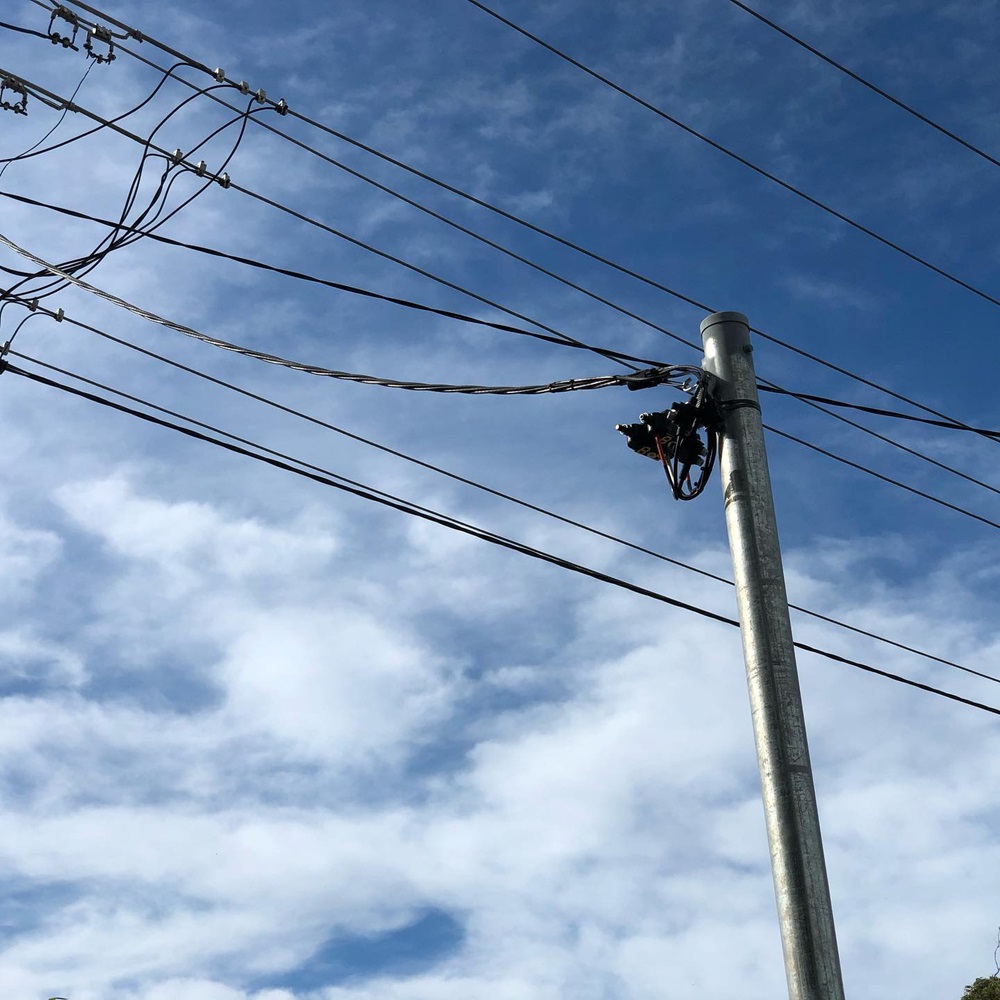
Galvanised steel poles have gained popularity among property owners seeking enhanced aesthetics and extended service lives. These poles route cables internally through hollow centres, creating cleaner appearances compared to timber poles requiring external mounting hardware. Steel poles resist rot and insects indefinitely, though coastal salt exposure accelerates galvanisation degradation potentially requiring maintenance or eventual replacement.
Paint finishes allow steel poles to complement property colour schemes, providing aesthetic flexibility timber alternatives cannot match. This customisation capability appeals to property owners prioritising visual integration of electrical infrastructure with overall property aesthetics and architectural styles.
Composite poles manufactured from fibreglass and epoxy resins represent premium options offering exceptional performance and longevity. These poles resist rot, rust, corrosion, fire, and insect damage indefinitely whilst providing service lives often exceeding seventy years with minimal maintenance requirements.
Lightweight construction simplifies composite pole installation reducing equipment requirements and labour costs partially offsetting higher material expenses. Their exceptional durability and minimal maintenance demands often prove cost-effective over extended service lives despite premium initial pricing.
Professional Installation Process Detailed
Quality pole installation follows systematic procedures ensuring safety, structural integrity, electrical compliance, and optimal long-term performance.
Securing necessary approvals initiates professional projects. Applications to councils, network operators, and other authorities with jurisdiction over work must be submitted and approved before physical work commences. Experienced Level 2 electricians manage these approval processes preventing costly delays or compliance failures.
Site preparation involves vegetation clearance, access establishment for equipment and materials, and underground service location verification. Depending on pole height, site characteristics, and access constraints, installation may require cranes, excavators, or specialised lifting equipment demanding appropriate site preparation and working space.
Foundation excavation proceeds after thorough underground service location. Hole depths and diameters are calculated based on pole height, expected loads including cable tensions and wind forces, and soil bearing capacity. Proper foundation sizing ensures structural stability preventing pole movement or collapse throughout service lives.
Foundation installation involves precise hole preparation, pole positioning, and concrete placement. Poles must stand truly vertical in both planes with appropriate embedment depth. Professional contractors verify alignment through precision levelling before concrete sets, preventing permanent installation errors affecting structural performance and aesthetic appearance.
Concrete curing requires adequate time before proceeding with electrical connection work. Rushing this stage risks foundation failure under service cable tensions or environmental loads. Professional contractors allow appropriate curing periods ensuring foundations achieve design strength before stressing them with electrical connections.
Electrical connection work begins after poles are securely installed and foundations have cured adequately. Service cables are routed and tensioned appropriately between network poles and private poles, maintaining required clearances throughout their spans. Connections at pole tops require specialised hardware ensuring both electrical continuity and mechanical strength withstanding environmental stresses.
Earthing system installation provides essential safety protection. Earth stakes are driven to appropriate depths near pole bases with connections verified through resistance testing. Proper earthing ensures fault currents flow safely to ground enabling protection devices to operate correctly during electrical faults.
Final inspections by network operators verify installations meet their technical standards before authorising energisation. These inspections confirm clearances, conductor sizing, connection quality, and earthing adequacy ensuring safe, reliable integration with distribution networks.
Height and Clearance Specifications
Australian Standards and network operator requirements establish minimum heights and clearances ensuring safety whilst maintaining reliable service delivery.
Minimum pole heights typically require service conductors maintaining at least 4.5 metres above ground level in most situations. Specific circumstances may demand greater heights depending on cable routing, terrain characteristics, and nearby structures or vegetation.
Clearances above driveways and vehicle access areas require particular attention. Service cables crossing driveways typically need 5.2 to 5.5 metres clearance accommodating tall vehicles including delivery trucks, emergency vehicles, and agricultural equipment. Inadequate clearances create serious safety hazards and regulatory non-compliance issues.
Horizontal clearances from buildings ensure maintenance access and fire safety. Conductors passing near buildings must maintain specified distances preventing accidental contact from windows, doors, or balconies whilst reducing fire spread risks during electrical faults or external fires.
Vegetation clearances protect both safety and service reliability. Trees and large shrubs should be positioned or regularly trimmed ensuring they cannot contact service cables under any weather conditions. Wind movement, tree growth, and potential falling branches all require consideration during site planning and ongoing maintenance.
Clearances from property boundaries and neighbouring structures prevent disputes whilst ensuring safety. Service cables must not overhang neighbouring properties without appropriate easements or agreements. Professional installation planning addresses these requirements preventing future complications.
Cost Factors and Investment Planning
Private pole installation costs vary substantially based on numerous factors making universal pricing impossible. Understanding cost drivers helps property owners budget appropriately whilst making informed decisions.
Pole quantity significantly influences total costs. Properties requiring single poles to span modest distances obviously cost less than installations needing multiple poles supporting extensive overhead service runs. Each pole requires materials, foundation work, electrical connections, and installation labour.
Material selection substantially affects project costs. Basic treated timber poles represent the most economical option, whilst premium composite poles command higher prices reflecting superior performance and longevity. Central Coast property owners typically invest between four thousand and twelve thousand dollars for complete installations including labour, materials, network coordination, and associated electrical work.
Site accessibility dramatically affects labour costs and equipment requirements. Poles in easily accessible locations with good vehicle access cost substantially less to install than those in difficult terrain, tight spaces, or locations requiring specialised access equipment or extended manual handling. Slopes, soft soil, dense vegetation, and confined spaces all complicate installations increasing expenses.
Additional electrical work frequently accompanies pole installations. Consumer mains installations, switchboard modifications or upgrades, metering equipment installation, and earthing system enhancements all add to total project costs. Comprehensive quotes should itemise these components providing clear expense visibility and preventing budget surprises during project execution.
Network operator charges cover application processing, disconnection services, inspections, and reconnection work. These fees vary between distributors and installation types but typically add several hundred to over a thousand dollars to total project costs. Experienced electricians incorporate these charges into comprehensive quotes providing accurate budget expectations from project outset.
Council permit fees and compliance costs add administrative expenses in some jurisdictions. Local requirements vary, but some councils charge fees for permit applications, building approvals, or compliance inspections. Professional contractors navigate these requirements securing necessary approvals as part of comprehensive project management services.
Aesthetic Integration and Property Enhancement
Visual impact concerns many property owners contemplating pole installations. Strategic planning minimises aesthetic disruption whilst satisfying technical requirements and regulatory compliance.
Pole positioning significantly influences visual prominence. Situating poles behind landscaping features, aligning them with fence lines or boundary vegetation, or positioning them away from primary viewing angles reduces aesthetic impact whilst meeting clearance and access requirements.
Material selection affects appearance substantially. Timber poles provide natural aesthetics complementing rural and semi-rural properties. Steel poles offer modern appearances suitable for contemporary properties and can be painted matching property colour schemes. Composite poles provide neutral appearances accepting paint finishes for customised aesthetics.
Landscaping integration transforms functional infrastructure into aesthetically pleasing elements. Strategic plantings screen poles from primary viewing angles whilst maintaining required clearances. Climbing plants on appropriate supports near poles create vertical green features softening infrastructure visibility.
Underground service alternatives eliminate visible poles and overhead cables entirely, though at significantly higher costs than overhead installations. Properties where aesthetics outweigh budget constraints often choose underground services for superior visual outcomes and enhanced property presentation.
Coordinating pole installations with broader property development plans creates integrated appearances. Positioning buildings to naturally screen electrical infrastructure, incorporating poles into fencing and gate designs, or aligning poles with architectural features creates cohesive appearances rather than conspicuous utility installations.
Ongoing Ownership Responsibilities
Private pole ownership creates ongoing maintenance and safety obligations extending throughout ownership requiring consistent attention and periodic professional intervention.
Regular visual inspections identify developing issues before they become emergencies. Annual checks examine poles for damage, leaning, deterioration, or electrical component problems. Post-storm inspections verify weather events haven’t compromised structural integrity or electrical connections requiring immediate attention.
Professional inspections every five years provide thorough assessments by qualified electricians. These examinations evaluate structural conditions, connection quality, earthing system integrity, and compliance with current standards. Documentation from professional inspections supports maintenance due diligence whilst identifying corrective actions preventing serious problems.
Vegetation management requires consistent attention throughout pole service lives. Ground vegetation should be cleared from pole bases reducing moisture retention that accelerates timber deterioration. Trees and shrubs must be pruned maintaining safe clearances from overhead conductors preventing electrical faults, fire risks, and service interruptions.
Documenting pole condition and maintenance history creates valuable records. Photographs, inspection reports, and repair receipts establish maintenance due diligence valuable during property sales whilst providing baselines for tracking deterioration rates informing future maintenance or replacement timing decisions.
Making Informed Contractor Selections
Pole installation demands specialised expertise justifying careful contractor selection protecting your investment and ensuring compliant, safe installations meeting all technical and regulatory requirements.
Level 2 ASP accreditation represents the fundamental credential legally authorising network-connected work. Verify candidates hold current accreditation through network operator registers rather than accepting verbal assurances alone. Legitimate contractors readily provide accreditation numbers and welcome credential verification demonstrating transparency and professionalism.
Relevant project experience with similar installations provides practical advantages. Electricians with extensive residential pole installation backgrounds bring insights and efficiencies reducing costs and timelines compared to contractors primarily working in different electrical specialties. Request examples of completed projects and client references you can contact for firsthand feedback.
Local knowledge delivers value generic qualifications cannot replicate. Electricians familiar with Central Coast soil conditions, weather patterns, and specific network operator requirements across the region navigate approval processes efficiently whilst applying area-specific knowledge to installation planning and execution.
Comprehensive insurance coverage protects all parties. Verify contractors maintain current public liability and workers compensation insurance meeting ASP scheme requirements. This protection safeguards property owners from liability if accidents occur whilst demonstrating contractor financial stability and professional standing.
Clear communication indicates professionalism and expertise. Quality electricians explain technical requirements clearly without condescension, provide detailed itemised quotes disclosing all anticipated costs, and set realistic expectations for project timelines and potential disruptions. They welcome questions and provide thorough answers demonstrating genuine expertise rather than evasive responses.
Taking the Next Steps
Understanding private power pole installation empowers Central Coast property owners to recognise when poles become necessary and select qualified contractors delivering safe, compliant outcomes protecting investments and ensuring reliable electrical service.
Niche Electrical and Solar brings fifteen years of electrical expertise to every private pole installation across the Central Coast. Their fully accredited Level 2 team combines technical excellence with genuine customer commitment ensuring your electrical infrastructure meets all safety, performance, and regulatory requirements.
Beyond pole installations, their comprehensive service portfolio addresses complete electrical infrastructure needs. From switchboard upgrades and three-phase power installations to metering solutions and overhead services, they deliver integrated solutions. Discover their full capabilities on their services page.
Ready to discuss your private pole installation requirements? Contact Niche Electrical and Solar today at 0404 285572 or through their contact page for professional assessment and expert installation services. Their experienced team provides the technical capability, regulatory knowledge, and customer service Central Coast property owners deserve for critical electrical infrastructure projects ensuring safe, reliable power delivery for decades to come.
