

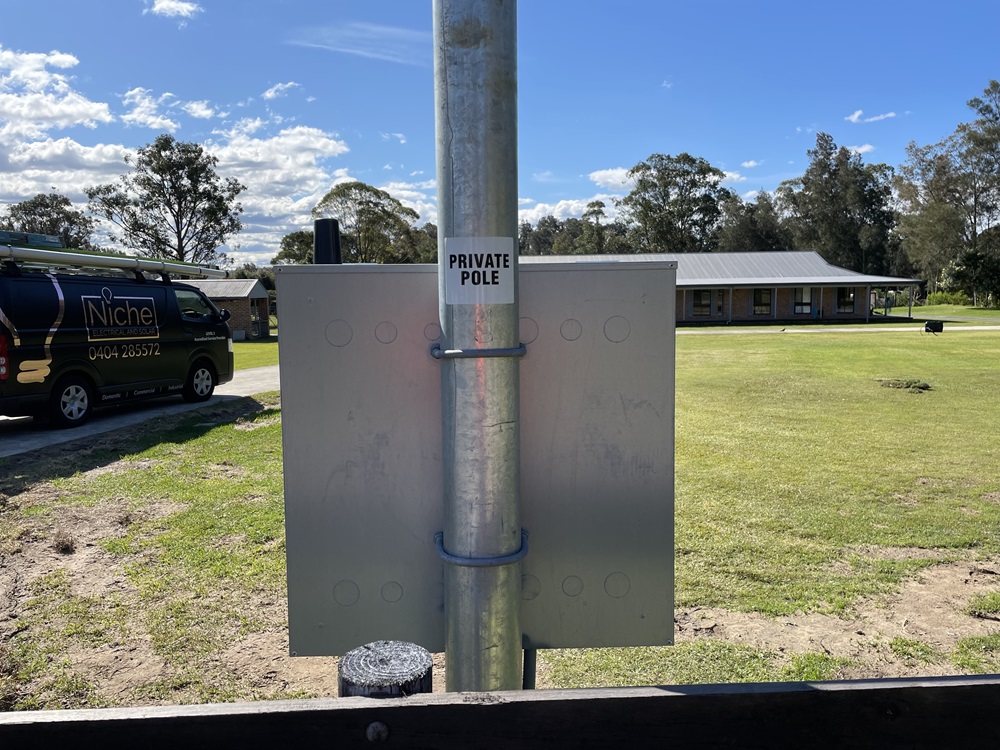
When a private power pole on your Central Coast property reaches the end of its useful life, most homeowners assume the path forward is clear: remove the old pole and put in a new one. That is often the right call. But there is a second option worth understanding before any decisions are made, and for some properties it can be the smarter long-term choice.
Going underground, that is, replacing your overhead service connection with a buried cable run, eliminates the pole entirely. It is a different scope of work, a different cost profile, and it suits some sites far better than others. Knowing how the two options compare puts you in a much stronger position when it comes to getting quotes, asking the right questions, and making a decision you will be happy with for decades.
This guide covers both approaches clearly, including what each involves, where costs typically land on the Central Coast, and how to work out which is right for your property.
Understanding What Makes a Power Pole “Private”
Before comparing your options, it is worth being clear on what you actually own and what you are responsible for maintaining. Private power poles are poles positioned within a property boundary that carry electrical service from the network distributor’s infrastructure to the buildings on your land.
Unlike the poles lining public streets, which are owned and maintained by Ausgrid as the network operator across the Central Coast, private poles belong to the property owner. That means the responsibility for inspecting, maintaining, and eventually replacing them sits with you, not with the energy network.
This distinction catches many property owners off guard, particularly those who have recently purchased an established home. The requirement to act becomes urgent when Ausgrid conducts a periodic inspection and issues a formal defect notice. These notices are legally enforceable, they carry real deadlines, and ignoring them can result in power disconnection until the required work is completed.
How Long Do Private Poles Last?
Timber poles have a typical service life of roughly thirty to fifty years, depending on the timber species, the quality of preservative treatment applied, and local environmental conditions. On the Central Coast, coastal salt air, high humidity, and termite activity can accelerate deterioration compared to more sheltered inland locations.
Common triggers for replacement include visible cracking or splitting along the pole body, ground-level rot that compromises the foundation, a noticeable lean indicating structural failure, or a formal defect notice from Ausgrid. Age alone warrants a professional assessment, even when obvious damage is not yet visible. Only a qualified Level 2 electrician can reliably determine the true condition of your pole and the full scope of work required.
The Case for a Like-for-Like Pole Replacement
For most residential properties on the Central Coast, replacing a deteriorated pole with a new one in the same position is the most practical and cost-effective solution. The process involves removing the existing pole, installing a new one, and reconnecting all associated wiring and hardware to current Australian Standards.
Modern replacement poles offer substantial improvements over the ageing timber structures common on older properties. Niche Electrical and Solar works with both steel and timber poles, and all materials used are Ausgrid-approved, meaning they meet the technical specifications required for network-connected work on the Central Coast.
Treated hardwood and treated pine remain popular choices, with properly installed timber poles providing reliable service for thirty to forty years or more. Galvanised steel poles have gained favour for their cleaner appearance, resistance to rot and pests, and the option to route cables internally for a neater finish. At the premium end, composite fibreglass poles offer exceptional durability with service lives that can exceed seventy years and minimal ongoing maintenance requirements.
What the Replacement Process Involves
A quality pole replacement is not simply a matter of swapping one pole for another. The process begins with a thorough assessment of the entire service connection, including the service cables, earthing system, insulators, and all associated hardware. Replacing the pole while leaving deteriorated cabling or inadequate earthing in place shifts the problem rather than resolving it.
Supply must be isolated before work begins, which requires a formal application to and scheduling with Ausgrid. Experienced Level 2 electricians manage this coordination directly, which keeps the process moving efficiently and minimises the time your property is without power. Once the new pole is installed, all connections are tested and a Certificate of Compliance is issued confirming the installation meets the requirements of Australian Standard AS/NZS 3000:2018.
Going Underground: When It Makes More Sense
Replacing an overhead service connection with an underground cable run is a legitimate and increasingly popular alternative, particularly on properties where the aesthetic impact of an overhead pole is a concern, where site conditions make a new pole impractical, or where the property owner wants to eliminate ongoing maintenance obligations entirely.
Rather than erecting a new pole, the electrical service is brought to the property via a conduit buried below ground level. The pole and overhead cables disappear from the property altogether. Niche Electrical and Solar offers both overhead and underground electrical services across the Central Coast, making them well-placed to assess both options and provide honest advice on which suits your specific site. You can explore these services in detail on their services page.
The advantages of going underground are real and worth understanding. There are no poles to periodically inspect, treat, or replace. Overhead cabling subject to storm damage, falling branches, and fire risks is removed. The visual impact on the property is reduced, which can improve overall presentation and support property value. For properties where overhead lines create ongoing clearance conflicts with maturing trees or planned landscaping, an underground connection resolves a persistent and recurring problem.
What Going Underground Involves
Underground service connections require trenching along the route from the network connection point to your property’s meter box. The complexity of that work varies considerably depending on the distance involved, the soil conditions on your site, and any obstacles along the route such as driveways, established gardens, or paved surfaces.
Central Coast properties with sandy or loamy soils typically allow for efficient trenching. Properties with rocky ground, heavily established root systems, or significant areas of concrete or paving present greater challenges that affect both the timeline and the cost. A site visit from a qualified electrician is the only reliable way to understand what your specific property involves before committing to this approach.
As with pole replacements, the connection from the network side requires a Level 2 ASP electrician with both the technical qualifications and the Ausgrid authorisation to carry out the work. At the property end, the installation must comply with current wiring standards and be supported by appropriate compliance documentation.
Comparing Costs and Timelines on the Central Coast
Cost is one of the most significant factors in deciding between a pole replacement and an underground connection, and it is worth having realistic expectations for both options before seeking quotes.
For a like-for-like residential pole replacement on a typical Central Coast property, total costs including labour, materials, and associated electrical work generally fall in the range of four thousand to ten thousand dollars. Site accessibility, pole height, material selection, and the condition of existing cables and hardware all influence where a specific project lands within that range.
Underground connections tend to carry higher upfront costs, driven largely by excavation requirements and the cost of conduit, cable, and any surface reinstatement work needed after trenching. On a property where the route is long, the ground is difficult, or driveways and paving must be cut and reinstated, costs can move well above a pole replacement. On a property where the route is short, the ground is easily worked, and no significant surfaces need to be disturbed, the cost difference can be modest and the long-term maintenance savings can make the investment worthwhile.
It is also worth factoring in lifecycle costs. Underground connections typically have lower ongoing maintenance requirements because there are no poles to monitor, treat, or replace in the future. For property owners with a long-term view of their investment, this advantage can shift the value calculation meaningfully in favour of going underground.
Timelines for both options are shaped significantly by the scheduling process with Ausgrid for supply isolation. This coordination typically adds one to three weeks to a project timeline regardless of which option is chosen. The physical work itself, once supply is isolated, generally takes one to two days for a pole replacement and two to three days or more for an underground connection depending on site complexity.
Why You Need a Level 2 Electrician for Either Option
Neither private pole replacements nor underground service connections are jobs that any licensed electrician can legally undertake. Both options involve working on or near network-connected infrastructure, which requires Level 2 ASP accreditation. ASP stands for Accredited Service Provider, a credential that authorises electricians to carry out specific categories of network-connected work that general electricians are not permitted to perform.
Choosing a Level 2 electrician with real experience in both overhead and underground work means you receive an honest, site-specific assessment rather than a recommendation shaped by familiarity with only one type of job. The right contractor will visit your property, evaluate the existing infrastructure, consider your budget and plans, and give you a clear picture of what each option realistically involves before any decisions are locked in.
Credential verification is important. Legitimate Level 2 ASP electricians can provide their accreditation details and welcome verification. Always confirm credentials before engaging anyone for this type of work, and be cautious of quotes that seem unusually low, as network-connected work carried out without proper accreditation creates serious safety, legal, and insurance risks.
Get Expert Advice from Niche Electrical and Solar
Niche Electrical and Solar has spent fifteen years delivering Level 2 electrical services across the Central Coast, with a reputation built on technical expertise, clear communication, and work that meets both regulatory requirements and homeowner expectations. Their fully accredited team has experience with both private pole replacements and underground connections, and they use only Ausgrid-approved materials on every project.
Whether your ageing pole needs a direct replacement or your property is better suited to going underground, their team will give you an honest assessment of both options, a clear explanation of what is involved, and transparent pricing with no hidden costs.
Don’t wait for a defect notice to force a rushed decision under pressure. Contact Niche Electrical and Solar today on 0404 285 572 or reach out through their contact page to arrange a professional assessment. Getting the right advice early makes the whole process far less stressful, and it puts you in control of the outcome.
