

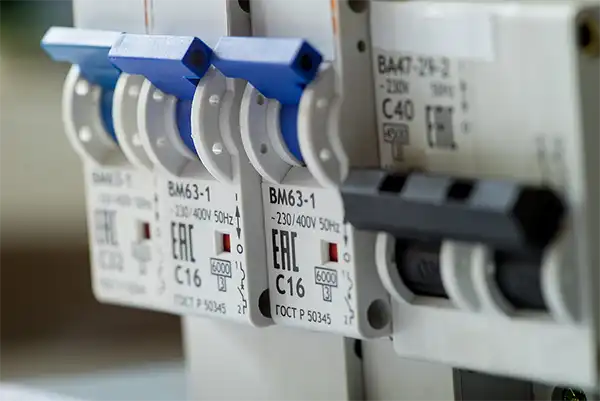
When Central Coast homeowners start thinking about electrical switchboard upgrades, the conversation usually centres on the panel itself. The enclosure on the wall, the rows of circuit breakers inside, the safety switches that trip during faults. That is understandable. The switchboard is visible, accessible, and fairly easy to grasp as a concept.
What often goes unexamined is the infrastructure feeding that switchboard in the first place. The consumer mains, which are the cables carrying electricity from the network distributor’s connection point into your meter box and switchboard, are just as critical to the safety and performance of your home’s electrical system. They age, they deteriorate, and on many older Central Coast properties they are operating well beyond their intended capacity. Yet they rarely come up in conversation until a problem forces the issue.
Understanding the consumer mains alongside the switchboard gives homeowners a complete picture of what their electrical infrastructure actually involves, what risks a deteriorated system can create, and why addressing both components together is nearly always the smarter approach.
What Are Consumer Mains and Why Do They Matter?
The term consumer mains refers to the cables that carry electrical supply from the network distributor’s infrastructure to your property’s meter box and switchboard. On most residential properties, this means the cables running from either an overhead service connection at a private power pole or the street’s underground network through to the point where your electricity meter and main switch are located.
These cables carry the full electrical load of the property. Every light, appliance, air conditioner, and power point draws its power through the consumer mains before it reaches any individual circuit in your switchboard. They are the foundation on which the rest of your electrical system sits, and in older homes that foundation can be showing serious signs of age.
On most homes built before the 1990s, consumer mains were installed using wiring technology that was entirely appropriate for its era. The cables were sized for the loads of the time and insulated with materials considered reliable and durable. The problem is that those materials have now been in service for thirty, forty, or even fifty years, in many cases under conditions far more demanding than they were ever designed for.
The Route Power Takes to Reach Your Home
To understand why consumer mains matter, it helps to picture the journey electricity takes from the street to your switches and power points. The network distributor’s infrastructure, managed by Ausgrid across the Central Coast, brings supply to your property boundary. From that point, the consumer mains carry the supply across to your meter box, where your electricity meter records consumption before power passes through to the main switch and into your switchboard circuits.
Everything between the network connection point and your main switch falls within the consumer mains. On properties with private power poles, that includes the service cables running from the pole to the meter box. On properties with underground supply, it includes the cables from the pit or pillar at the boundary through to the meter. The condition and capacity of those cables directly determines whether your property receives reliable, safe electrical supply, or whether it is running on infrastructure that is quietly struggling under the weight of modern demand.
How Age and Load Take Their Toll on Consumer Mains
Consumer mains cables installed in older homes were typically rated for current loads that reflect how Australians used electricity decades ago. A home with a modest kitchen, one or two air conditioners, and basic lighting demanded a fraction of what a comparable household draws today. Ducted air conditioning, large kitchen appliances, home offices running multiple devices, and the generally higher baseline of modern electrical consumption all place demands on consumer mains infrastructure that was never designed to meet them.
When cables carry loads approaching or exceeding their rated capacity on a sustained basis, heat builds up within the cable. Over time, this thermal stress degrades insulation, weakens connections, and accelerates the ageing process considerably. Cables that might have lasted another decade under modest loads can deteriorate far faster under the sustained loading of a modern household.
Insulation degradation is the other major factor. The materials used to insulate consumer mains cables in older installations were effective for their era but do not match the durability standards of modern equivalents. After decades of thermal cycling, UV exposure in parts of the run exposed to sunlight, and general environmental stress, older insulation becomes brittle, cracks, and loses its protective properties. Degraded insulation creates risks ranging from nuisance faults through to arcing and fire hazards in more serious cases.
Warning Signs That Something Is Not Right
Consumer mains deterioration is not always obvious, and in many cases it produces no dramatic symptoms until a serious fault develops. That said, there are indicators worth knowing about. Persistent voltage drops causing lights to dim when large appliances start up can point towards consumer mains capacity limitations. A main switch or meter box that feels warm during normal operation is worth investigating. Visible deterioration of service cables, including cracked or perishing outer sheathing where cables are accessible for inspection, is a clear prompt for professional assessment.
In many cases, consumer mains issues are identified during a switchboard upgrade when a qualified electrician assesses the full system rather than just the panel in isolation. This is precisely why a thorough assessment matters more than a quick quote focused on replacing a single component without reviewing what is feeding it.
Why Consumer Mains Work Requires a Level 2 Electrician
Consumer mains work is specifically classified as Level 2 electrical work under the NSW regulatory framework. This is not a minor technical distinction; it has direct practical consequences for any Central Coast homeowner arranging this type of work.
Level 2 ASP accreditation, where ASP stands for Accredited Service Provider, authorises electricians to carry out specific categories of work involving connections to the electrical distribution network. Consumer mains fall into this category because the cables involved connect directly to network infrastructure. Disconnecting, upgrading, and reconnecting consumer mains requires formal coordination with Ausgrid, the network operator for the Central Coast. A general licensed electrician, regardless of their skill and experience in other areas of residential electrical work, cannot legally complete this work.
This regulatory requirement matters to property owners in several ways. First, only a Level 2 electrician can legally carry out consumer mains work, so verifying credentials before engaging anyone is not optional. Second, the formal coordination process with Ausgrid adds a scheduling component that needs to be factored into project timelines, as supply isolation must be booked in advance. Third, the compliance documentation issued by a Level 2 electrician upon completion is the only evidence of legal, compliant work that insurers, future buyers, and regulatory authorities will accept.
Niche Electrical and Solar holds full Level 2 ASP accreditation and manages the Ausgrid coordination process directly on behalf of their clients. Central Coast homeowners do not need to navigate the network operator’s requirements independently; the process is handled end to end as part of the job.
Upgrading the Switchboard and Consumer Mains Together
One of the most common scenarios Niche Electrical and Solar encounters on older Central Coast properties is a homeowner who contacts them for a switchboard upgrade, only for the assessment to reveal that the consumer mains also need attention. This is not unusual, and it is not a complication created by the assessment itself. It reflects the straightforward reality that both components have been in service for the same number of years, under the same increasing loads, and they often deteriorate on a similar timeline.
Addressing both components in a single project is nearly always the most efficient approach, both in terms of cost and disruption to the household. Supply isolation from Ausgrid is required for both types of work. Combining them means going through that coordination and disconnection process once rather than twice. Mobilisation, site preparation, and network operator inspection are consolidated rather than duplicated. The total cost of completing both upgrades together is typically lower than scheduling them as separate projects months or years apart.
There is also a practical logic to it from a compliance standpoint. Installing a new, compliant switchboard while leaving aged and potentially undersized consumer mains in place creates an imbalance that a thorough licensed electrician will not recommend. A new switchboard may increase load capacity and add circuits, placing even greater demand on consumer mains that were already under pressure. A complete upgrade ensures the entire supply path from the network connection to the individual circuits in the switchboard meets current standards and is genuinely fit for purpose.
What a Combined Upgrade Involves
A professional combined upgrade begins with a thorough assessment of the existing installation. The electrician evaluates the condition of the consumer mains cables, the capacity of the existing service relative to the property’s actual load requirements, and the full scope of the switchboard replacement, including the number of circuits required, the configuration of safety switches, and any associated work to earthing systems or meter box arrangements.
Supply isolation is coordinated with Ausgrid, and the work proceeds once a scheduled disconnection time is confirmed. Consumer mains cables are replaced with new cabling correctly sized and routed in accordance with AS/NZS 3000:2018 and the current NSW Service and Installation Rules. The new switchboard is installed and wired, each circuit is tested, and RCD trip times are verified before supply is restored.
On completion, Certificates of Compliance are issued covering all work carried out. These documents confirm that both the consumer mains upgrade and the switchboard installation meet the required Australian Standards, providing the legal proof of compliant work that every property owner should retain permanently in their property records.
What Central Coast Homeowners Should Budget For
Consumer mains upgrades are typically priced as part of a combined scope with switchboard work, and costs vary depending on the length of the consumer mains run, the existing service cable configuration, and whether any associated work is required to the meter box or earthing system.
For a typical residential property on the Central Coast, a combined switchboard and consumer mains upgrade generally falls in the range of three thousand five hundred to eight thousand dollars, depending on the complexity of the job. Properties with longer consumer mains runs, older meter box configurations requiring modification, or more complex switchboard requirements will sit towards the upper end of that range. A detailed, itemised quote from a qualified Level 2 electrician is the only reliable way to understand what a specific property genuinely involves before committing to the work.
Get the Full Picture from Niche Electrical and Solar
Most electrical problems that develop in older Central Coast homes do not happen because of a single failing component. They develop because the entire supply path, from the network connection through the consumer mains and into the switchboard circuits, has been in service for decades without a comprehensive review. Understanding the switchboard and the consumer mains as connected parts of the same system is the starting point for addressing the risks properly and getting the outcome right.
Niche Electrical and Solar has been delivering professional electrical switchboard upgrades and consumer mains work across the Central Coast for fifteen years. Their fully accredited Level 2 team has the qualifications to carry out every component of the work, from the Ausgrid coordination through to the compliance documentation, and their straightforward approach means clients receive honest assessments and clear pricing rather than quotes that grow once work is underway.
Their broader service portfolio covers the full range of ASP Level 2 electrical work across the region, from private pole installations and three-phase upgrades to overhead and underground services and metering solutions. You can explore everything they offer on their services page.
If your Central Coast home is more than twenty years old and has not had a professional electrical assessment in some time, now is a good moment to arrange one. Contact Niche Electrical and Solar on 0404 285 572 or reach out through their contact page to book a comprehensive assessment. Their experienced team will give you a clear, honest picture of where your electrical infrastructure stands and what it needs, with no pressure and no surprises.
